
How to Seal Concrete Floors: A Guide for Warehouses and Garages
Learning how to seal concrete floors correctly improves durability, reduces dusting, and protects floors from stains, moisture, and everyday wear.
Choosing the right concrete sealer depends on how the floor is used and the condition of the concrete. Acrylic, polyurethane (PU), and epoxy sealers each serve very different performance levels, from light domestic sealing to heavy industrial protection.
This guide shows you exactly which concrete sealer to use, how to prepare the surface properly, and how to apply it for long-term durability in garages, warehouses, and workshops.
Why Concrete Floors Need Sealing
Concrete might look tough, but it’s naturally porous. Without the right protection, it absorbs oil, water, dirt, and chemicals, leading to staining, dusting, and premature deterioration. A quality concrete sealer creates a protective barrier that extends the life of the floor while making it much easier to clean and maintain.
Protect concrete from stains and moisture with our Concrete Primers & Sealers →
Step 1: Preparing Your Concrete Floor for Sealing
Correct surface preparation (degreasing, dust removal, and moisture control) determines adhesion and lifespan of a concrete sealer system. Even the best sealer won’t perform properly if it’s applied over oil contamination, dust, or trapped moisture.
How to Prepare an Oily Concrete Floor
Oil and grease must be fully removed before sealing, or the coating won’t adhere properly.
Start by sweeping away loose dirt and debris. Apply a concrete degreaser and scrub the surface thoroughly with a stiff brush, focusing on stained areas. Rinse well with clean water to remove any residue.
If heavy staining remains, repeat the process until the surface is clean.
Leave the floor to dry completely before moving on to sealing.
Prepare concrete properly with our Painting Accessories →
How to Test for Moisture in Concrete
Concrete must be completely dry before sealing. Trapped moisture causes adhesion failure and surface blistering.
The plastic sheet test is a standard method for checking concrete moisture. Tape a clear plastic to the floor and leave it for 24 hours. If condensation appears underneath or the concrete darkens, there’s still moisture in the slab.
For larger or commercial projects, a concrete moisture meter offers a more accurate assessment.
Waiting another day might feel frustrating, but it's far easier than stripping off a failed coating and starting again.
Step 2: Choosing the Right Concrete Sealer
Choosing the right concrete sealer starts with understanding how the floor will be used. Acrylic, polyurethane (PU), and epoxy concrete sealers are designed for different performance levels. Choosing the wrong system reduces durability and increases maintenance requirements.
Acrylic vs PU vs Epoxy Sealers
Acrylic sealers are best for fast application and light-duty floors, PU sealers provide higher stain resistance, and epoxy sealers deliver maximum durability for heavy-use environments.
-
Acrylic sealers are fast-drying and easy to apply. They are used on domestic and light commercial floors.
-
PU (polyurethane) sealers provide higher resistance to stains, oil, and chemicals. They are used on driveways, garages, and workshops.
-
Epoxy sealers provide maximum durability. They are used in high-traffic industrial environments.
The floor environment determines the correct sealer system. It can be tempting to choose the quickest or cheapest option, but matching the sealer to the way the floor is actually used will always deliver better long-term results.
Protect your concrete with our Concrete Primers & Sealers →
Our Top Picks:
Choosing the right concrete sealer is easier when you match the product to the job. Below are our recommended options for the most common garage, warehouse and commercial floor applications.
|
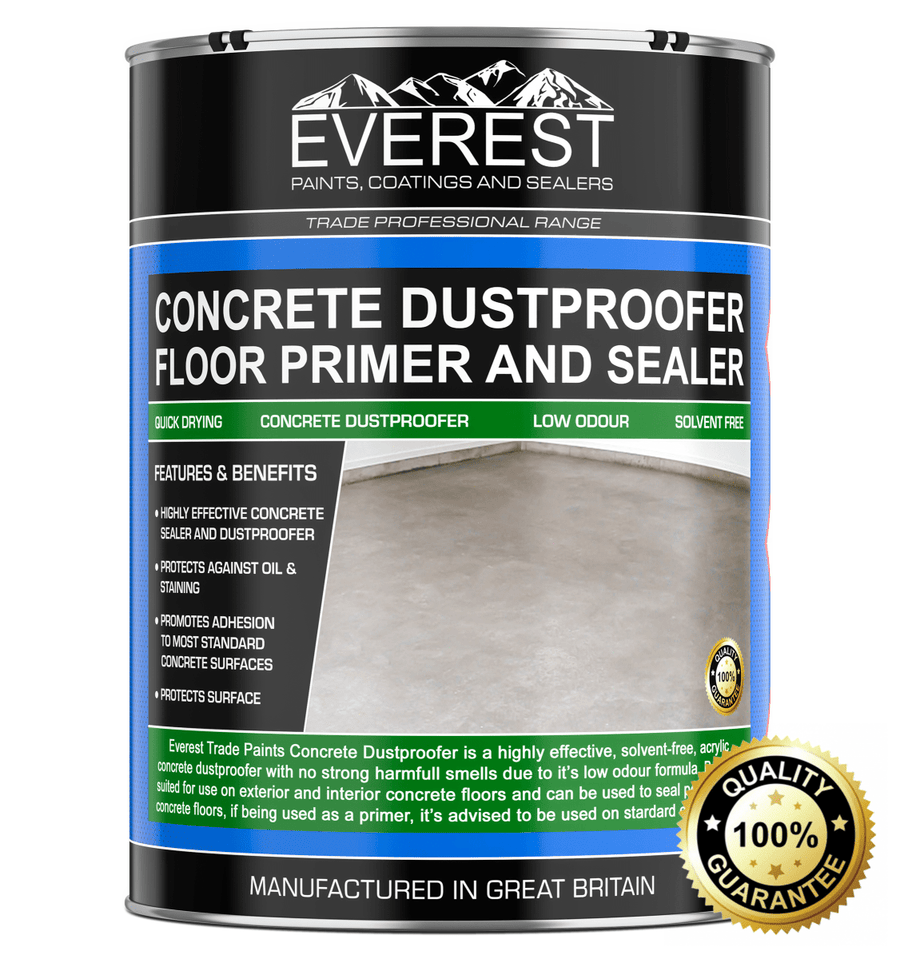
Our Top Pick: Everest Trade - Concrete Dustproofer / Floor Primer & Sealer |
Top Pick: Acrylic Floor Sealer
|

|
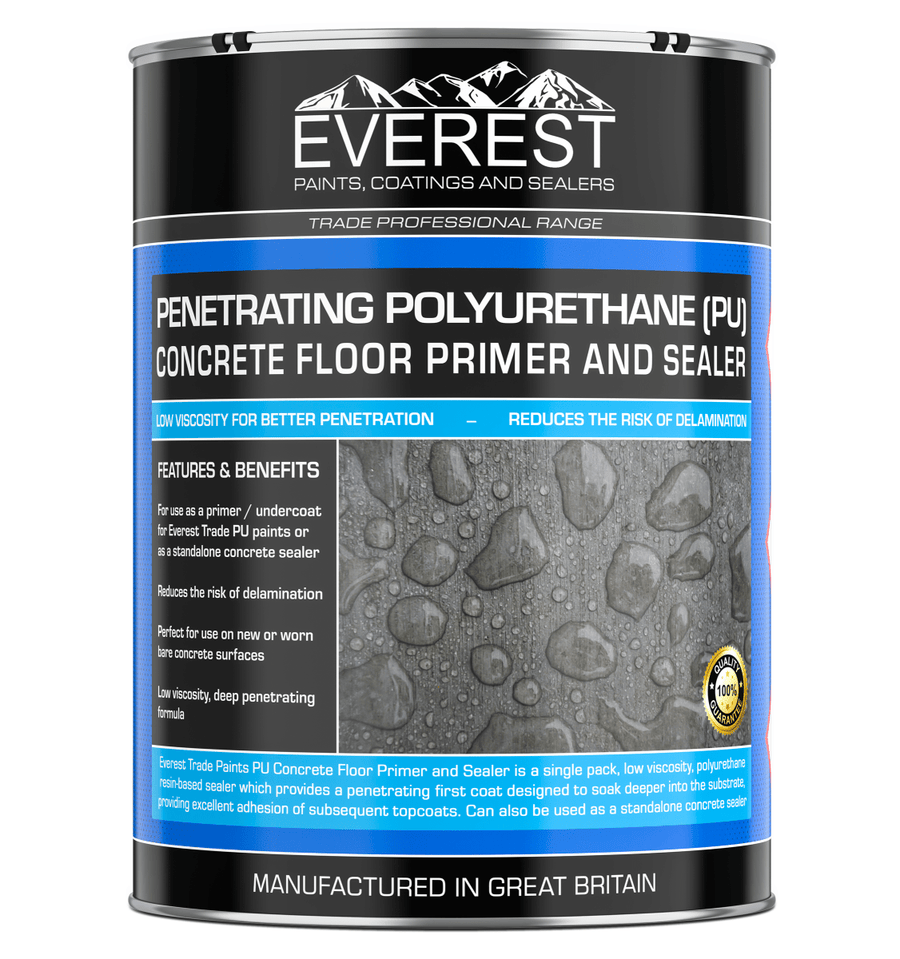
Our Top Pick: Everest Trade - Penetrating Polyurethane Concrete Dustproofer / Floor Primer & Sealer |
Top Pick: PU Floor Sealer
|

|
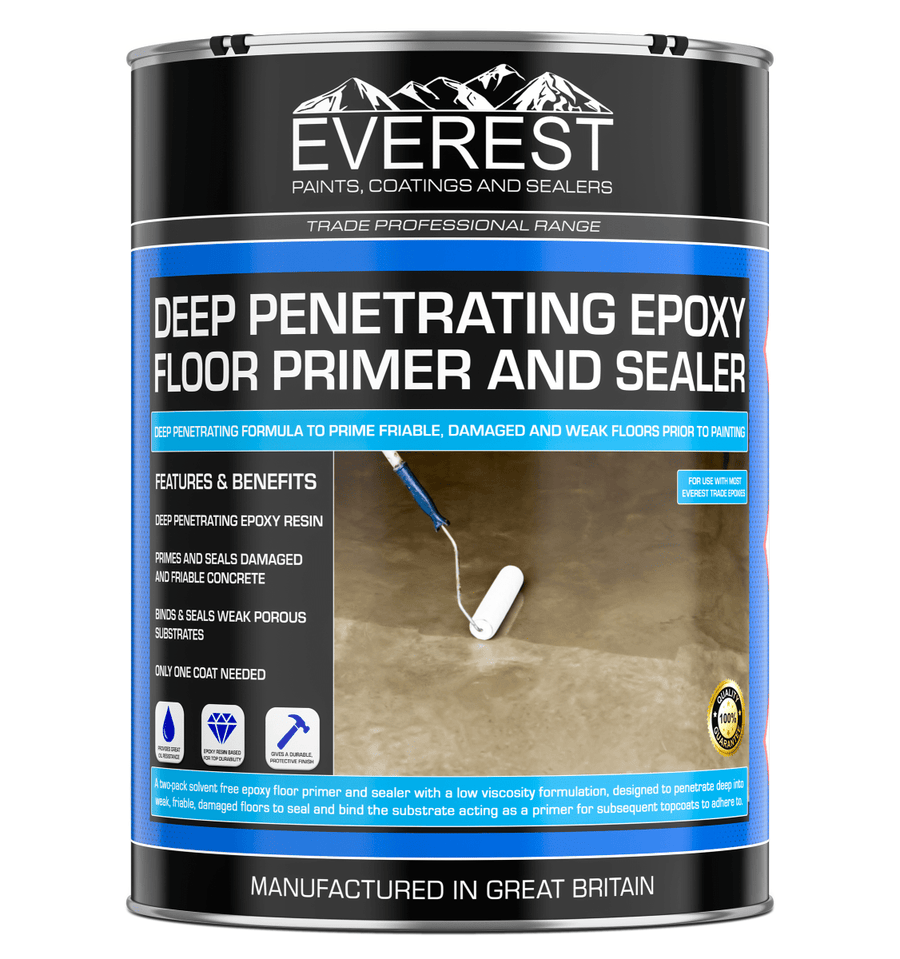
Our Top Pick: Everest Trade - Deep Penetrating Epoxy Primer / Sealer - Two-Pack Epoxy Coating |
Top Pick: Epoxy Floor Sealer
|

Step 3: Applying Concrete Sealer
Roller type, coat thickness, and application method determine finish quality and long-term durability of a concrete sealer.
What Roller or Brush Should I Use for Sealing Concrete Floors?
Microfibre rollers, solvent-resistant rollers, and angled brushes directly affect coverage consistency and edge finish quality.
Use a microfibre roller with most water-based acrylic sealers to achieve an even, consistent coat. For solvent-based PU or epoxy systems, use solvent-resistant rollers designed to handle heavier coatings without breaking down.
Brushes are used for edges, corners, and tight areas where rollers cannot reach.
Complete your project with our Painting Accessories, including rollers, brushes, and sprayers →
How Many Coats Are Needed?
Most concrete sealers require two coats for full protection and a uniform finish. Even the best concrete sealer will underperform if it is applied with the wrong tools or in the wrong thickness.
The first coat penetrates and seals the surface, while the second builds durability and ensures even coverage across the floor.
Avoid applying thick coats, as this can lead to uneven curing and reduced performance. Instead, apply two thin, even layers and allow proper drying time between coats as specified by the manufacturer.
Drying times vary between acrylic sealers, polyurethane (PU) sealers, and epoxy systems, depending on resin chemistry, temperature, and humidity.
Common Mistakes to Avoid
Most concrete sealer failures come down to preparation, product choice, or timing.
-
Sealing damp concrete: Moisture prevents proper adhesion and can cause bubbling or peeling.
-
Poor cleaning: Oil, grease, and dust stop the sealer from bonding to the surface.
-
Applying coats too thick: Thick coats can cure unevenly and reduce overall durability.
-
Choosing the wrong system reduces performance. Acrylic, PU, and epoxy systems are not interchangeable.
-
Walking on too early: Traffic before full-cure can permanently damage the finish.
Ready to Seal Your Concrete Floor?
Long-lasting concrete floors don't happen by chance. They come from choosing the right concrete sealer, preparing the surface properly, and applying the coating correctly. Match the sealer to the environment, don't rush the preparation, and you'll give your floor the best chance of performing for years to come. When you're ready, explore our range of Concrete Primers & Sealers to find the right solution for your project.